Wheat's On Your Mind Episodes
Episode Notes
 EP 421
100 Episodes: Wheat’s Past, Present, and Future
with Dave Deken
Wheat’s On Your Mind celebrates 100 episodes by looking back at the people and conversations that have helped explain Kansas wheat. Host Aaron Harries joins producer Dave Deken to revisit favorite interviews and talk about what they hope to cover next. <br>Their conversation brings together the crop’s history, the work happening in wheat research and the farm families whose stories give the industry a human face.<br><br>The retrospective shows how changes in wheat production have always depended on changes elsewhere in the industry. Author Glenn Ediger’s archive clip explains how mills needed new processing methods to handle hard winter wheat, while wheat geneticist Mary Guttieri describes the ongoing challenge of improving grain protein without sacrificing yield. Aaron and Dave also revisit Ken and Deb Wood’s account of surviving a tornado near Chapman, Kansas, and the neighbors who helped them afterward. Those conversations show why family experience and community support belong alongside science in the story of wheat.<br><br>Other clips follow the crop into new products and international markets. Hayes Kelman describes Boot Hill Distillery’s approach to making spirits from grain grown on its own farm, and U.S. Sen. Jerry Moran discusses why access to buyers beyond Kansas matters to the state’s economy. As Aaron and Dave look toward the next hundred episodes, they emphasize making research understandable, hearing directly from farmers and preserving stories that might otherwise be lost. Listeners can explore earlier conversations at WheatsonYourMind.com and suggest future topics by emailing kswheat@kswheat.com.
 EP 420
Global Wheat: What Could Move Kansas Prices
with Mike O’Dea, Justin Gilpin
Wheat markets have pulled back, but StoneX’s Mike O’Dea says producers should not assume the story ends with weaker futures. In this episode of Wheat’s On Your Mind, O’Dea joins host Aaron Harries and Kansas Wheat CEO Justin Gilpin to examine the forces shaping hard red winter wheat—from Black Sea exports and European prices to domestic milling demand, farmer selling and Southern Plains planting conditions. One of the biggest questions is whether tightening availability in the cash market eventually strengthens basis and creates another pricing opportunity.<br><br>O’Dea explains that Russia and Ukraine continue moving wheat despite difficult Black Sea logistics, helping pressure global prices. At home, meanwhile, farmer selling has slowed considerably following earlier pricing opportunities. He expects basis and spreads to become especially important as mill demand picks up moving into the new year and spring. The group also discusses wheat quality, potential changes in planted acres and the competition between wheat and corn for Southern Plains acres. Improved moisture is good news for wheat establishment, but that same moisture could give growers more options when spring arrives. <br><br>The discussion then expands around the globe. French wheat is finding opportunities created by Black Sea disruptions, while crop conditions in Argentina, Brazil, Canada, India and Australia could alter trade flows. O’Dea also points to El Niño and historical weather patterns as something producers should watch heading toward the next growing season. For farmers making marketing decisions, his larger message is that flat futures prices are only one part of the equation. Basis, spreads, commercial buying, production costs and risk-management tools can all matter when determining whether an opportunity fits an individual operation.
 EP 419
Wheat Farming: Legacy, Markets and Survival
with Mike McClellan
For Mike McClellan, wheat farming is both a family legacy and an evolving business. The Plainville, Kansas, producer farms in Rooks and Graham counties and comes from a family with deep ties to agriculture and wheat leadership. His father, Bob, served on the Kansas Wheat Commission and the Rooks County Conservation Board, while his mother, Jo Eva, participated in the Kansas Wheat Hearts program. McClellan followed that tradition of service, joining the Kansas Wheat Commission in 2011 and eventually serving with U.S. Wheat Associates. In this episode of Wheat’s On Your Mind, he joins Aaron Harries to discuss how both his farm and his perspective on the wheat industry have changed.<br><br>One of the clearest examples is McClellan Farms’ crop rotation. When Mike returned to the farm in 1994, he estimates roughly 80% of its crop acres were planted to wheat. Today that figure is closer to 20%, with corn, milo and other crops playing larger roles. The operation has largely eliminated summer fallow and has experimented with spring wheat as another way to create wheat stubble ahead of fall crops. Those decisions demonstrate that the value of a crop can extend beyond its individual profit and loss statement. A crop can also earn its place by helping make the entire rotation work.<br><br>McClellan also offers a producer’s perspective on challenges that extend far beyond one farm. The 2026 wheat crop fell short enough that he had to buy out some forward contracts, while high production costs and weak commodity prices continue to squeeze margins. At the same time, his work with Kansas Wheat and U.S. Wheat Associates has given him a greater appreciation for wheat quality and the long-term work required to develop export customers. Now approaching another transition, McClellan is also working to bring his nephew into an ownership position while considering how to treat other family members fairly. Through difficult crops, tight margins and generational change, his conclusion heading into another planting season remains distinctly agricultural: stay the course.
 EP 418
Can Australian Agronomy Improve Kansas Wheat?
with Romulo Lollato Ph.D., John Kirkegaard Ph.D.
Kansas and Australia may be separated by thousands of miles, but wheat producers in both regions face a familiar problem: producing a profitable crop when water is limited and weather refuses to cooperate. In this episode of Wheat’s On Your Mind, K-State wheat and forage Extension specialist Romulo Lollato Ph.D. and Australian farming systems agronomist John Kirkegaard Ph.D. compare the two production systems and discuss what each can learn from the other. Kirkegaard is spending several months at Kansas State University as the Fulbright Distinguished Chair in Agriculture and Life Sciences after Lollato completed an extended research visit to Australia.<br><br>One of the biggest lessons from Australia is that improving wheat production often requires looking beyond the wheat crop itself. Australian growers and researchers have investigated soil constraints, rotations, summer fallow, weed control, planting dates, fertility and other pieces of the cropping system together. Kirkegaard describes a major water-use efficiency initiative that challenged grower groups to improve system water-use efficiency by 10% over five years. Better soil and rotation management combined with strict summer weed control helped some growers carry roughly 2 additional inches of stored moisture into the growing season. The work illustrates what Kirkegaard calls “incremental transformation”: individual management improvements may appear modest, but their combined effect can fundamentally change crop performance.<br><br>Those lessons are now helping inspire new research in Kansas. Lollato discusses plans for a Profitable Wheat Frontier Network that would bring researchers directly into producers’ fields and use commercial equipment, soil and plant samples, yield maps and precision agriculture technologies to investigate ways to increase both yield and profit. Instead of assuming that greater yield requires simply adding more inputs, researchers want to determine which investments actually contribute to productivity and where costs can be reduced without sacrificing yield. After a 2026 Kansas wheat season marked by drought, freeze, hail, flooding and extraordinary temperature swings, the collaboration also opens new opportunities to understand how wheat systems can better withstand weather extremes.
 EP 417
Wheat Demand: Why Bread Needs Defending
with Josh Sosland, Justin Gilpin
For more than 100 years, Sosland Publishing has watched wheat move from the farm through flour mills, bakeries and ultimately onto consumers’ plates. That history gives Josh Sosland, president of Sosland Publishing Company and editor of Milling & Baking News, a unique perspective on one of the wheat industry’s most important challenges: Americans are eating less bread, and history suggests the industry cannot expect that trend to reverse on its own.
 EP 416
Kansas Wheat: Lessons From a Brutal 2026 Crop
with Romulo Lollato Ph.D., John Kirkegaard Ph.D., Dave Deken
The 2026 wheat crop offered producers in Kansas and Oklahoma an unwelcome lesson in just how quickly conditions can change. The crop entered winter with excellent stands in many areas after timely fall moisture and unusually warm temperatures encouraged strong growth.
 EP 415
America's Agricultural History Still Matters
with Douglas Hurt, Ph.D.
As the United States celebrates its 250th anniversary, it's an ideal time to reflect on the role agriculture has played in building the nation. In this episode, historian and author Douglas Hurt, Ph.D., traces the evolution of American farming from the colonial era through westward expansion, commercialization, mechanization, and today's highly connected global marketplace. His perspective illustrates that agriculture has never simply produced food—it has shaped economic development, transportation, education, public policy, and even international diplomacy.<br><br>The discussion also highlights the uniquely important role Kansas wheat has played in American agriculture. Hurt explains how the arrival of Turkey Red wheat, the expansion of the railroad network, the establishment of land-grant universities, and the development of the Soil Conservation Service helped define modern wheat production across the Great Plains. These innovations continue to influence farming practices today.<br><br>Looking ahead, Hurt argues that while the number of farmers may continue to decline, American agriculture's future remains strong because of continued investments in science, technology, education, and research. His historical perspective reminds listeners that every generation of farmers has faced uncertainty—and that understanding the past provides valuable insight for navigating the future.
 EP 414
U.S. Wheat Quality: Winning Beyond Price
with Brian Liedl, Justin Gilpin
A strong export year gave U.S. wheat producers something to build on, but the 2026/27 marketing year presents a different test. Brian Liedl, vice president of overseas operations for U.S. Wheat Associates, joins host Aaron Harries and Kansas Wheat CEO Justin Gilpin to discuss how the industry can retain international customers as hard red winter wheat supplies tighten and prices become less competitive. Liedl brings more than two decades of grain merchandising, trading and logistics experience to the conversation, including work directly with wheat buyers around the world.<br><br>The discussion focuses on markets that matter to Kansas producers. Mexico remains the most important destination for U.S. wheat and a major buyer of hard red winter wheat, making continued trade stability and customer support essential. Nigeria, Indonesia and other price-sensitive markets also increased their purchases during the previous marketing year. The challenge now is demonstrating that U.S. wheat can provide enough milling performance, protein, baking quality and consistency to justify a higher purchase price. Liedl explains how technical assistance, product testing and long-standing relationships help millers capture more value rather than simply buy the cheapest available wheat.<br><br>Looking beyond the current crop, Liedl sees reasons for optimism in global wheat demand. World consumption has remained strong even as Russia, Australia, Argentina, Canada and other exporters have expanded production. A smaller U.S. HRW crop will limit available bushels, but it may also encourage millers to consider new blends and purchasing strategies. Throughout the episode, Liedl returns to one guiding principle: overseas market development must ultimately support farmer profitability by creating dependable demand for the quality wheat produced in Kansas and across the United States.
 EP 413
FSA Overhaul: Faster Help for Kansas Farmers
with Richard Fordyce, David Schemm
Federal farm programs are often judged by how well they work at the local counter, and this episode puts that question front and center. Aaron Harries visits with Richard Fordyce, USDA Under Secretary for Farm Production and Conservation, and David Schemm, Kansas FSA State Executive Director, about what USDA reorganization and FSA modernization could mean for Kansas wheat producers who rely on commodity programs, conservation programs, farm loans, disaster assistance and crop insurance.<br><br>A major focus of the conversation is One Farmer, One File, USDA’s effort to reduce duplicate paperwork and modernize how producer information moves between FSA, NRCS, RMA and crop insurance providers. Fordyce describes a future where acreage reporting moves away from photocopied paper maps and manual data entry toward interactive mapping, mobile reporting and eventually precision ag data imports. Schemm compares the change to finally putting “auto steer” on FSA’s tractor — a practical shift meant to save time for both producers and county office staff.<br><br>The episode also steps back to look at the broader farm economy. With wheat growers facing tight budgets, high input costs, market pressure and short-crop concerns in parts of the central Plains, Fordyce and Schemm discuss the importance of a farmer-first safety net, better trade opportunities, domestic nitrogen production and continued service through local FSA offices. The result is a grounded policy conversation aimed at helping Kansas wheat producers understand what is changing, why it matters and what to watch next.
 EP 412
Kansas Wheat Harvest: Smaller Crop, Bigger Stakes
with Mike O’Dea, Josh Linville
Kansas wheat harvest has been anything but normal this year. The crop started early, slowed down with rain and humidity, and is now moving through the state with wide swings in yield, test weight, and protein. In this episode, Aaron Harries and Justin Gilpin talk with Mike O’Dea and Josh Linville of StoneX about what they are hearing from the field and what those early harvest reports may mean for Kansas wheat producers.<br><br>The market conversation moves quickly from Kansas fields to global trade. O’Dea explains how lower Kansas City futures have helped U.S. hard red winter wheat become more competitive in some export channels, including movement into Mexico, while global quality questions in Europe, Russia, and other wheat-producing regions could shape demand later in the year. The group also discusses Kansas City, Chicago, and Minneapolis wheat spreads, changes to spring wheat contracts, and why basis and storage decisions matter when elevator margins are tight.<br><br>On the fertilizer side, Linville breaks down the sharp move lower in urea prices, the possibility of nitrogen demand destruction, and why lower fertilizer prices do not automatically solve the farm-margin problem when grain prices remain weak. He encourages producers to keep talking with suppliers, stay informed, and consider layering fertilizer purchases rather than making one large decision in a confusing market. The episode closes with a broader look at U.S. crop-input security and why long-term nitrogen, phosphate, and potash strategy matters for farmers and the food system.
 EP 411
Farmer-Owned Bread: Keeping Wheat Value Local
with Brian Linin, Alan Townsend
Golden Waves Grain is built around a big question for Kansas wheat country: what if farmers could capture more of the value between the field and the bread aisle? In this episode, Aaron Harries talks with Brian Linin and Alan Townsend, co-founders of the Goodland-based project, about their plan to bring wheat receiving, flour milling, and commercial baking together in one facility. Their model would allow farmer-owners to deliver wheat directly into the plant, where it would be milled and baked into bread and buns for grocery distribution.<br><br>The conversation digs into the business model behind the project, including producer shares, delivery commitments, wheat premiums, strategic investors, and the projected size of the facility. Linin and Townsend explain why they believe the current bread supply chain leaves room for a different approach, especially when it comes to transportation, warehouse delivery, freshness, traceability, and local ownership. They also describe how fresh wheat, fresh flour, and a sponge-and-dough baking process could create a better eating experience.<br><br>Beyond bread, this episode is about rural development and the future of wheat country. Golden Waves Grain is projected to create 141 jobs, support farmer ownership, and build value around a crop that can be grown dryland in western Kansas. Lennon and Townsend also discuss how the facility could help identify wheat varieties with strong milling and baking performance, creating useful feedback for producers, breeders, and the broader Kansas wheat industry.
 EP 410
Wheat, Fiber, and the Food Pyramid
with Erin Ball, Leah Johnston
Federal nutrition guidance is shifting, and wheat foods are right in the middle of the conversation. <br>Erin Ball with the Grain Foods Foundation and Leah Johnston with Wildhive Strategic Communications join Aaron Harries to explain how the grain foods industry is responding to new dietary guidance, concerns about grains in school meals, and the need for science-backed communication.<br><br>The episode also takes on the growing debate around ultra-processed foods. Ball and Johnston make the case that wheat foods should be discussed through the lens of nutrition, affordability, accessibility and real eating habits—not just broad processing labels that may confuse consumers and overlook the value of enriched and whole grain foods.
 EP 409
Farm Program Changes Kansas Farmers Need
with David Schemm
Kansas wheat producers have several farm program changes to keep on their radar, from higher wheat reference prices to 2026 ARC/PLC elections, new base acre opportunities and disaster relief payments.<br><br>In this episode of Wheat’s On Your Mind, Aaron Harries talks with David Schemm, state executive director for the USDA Farm Service Agency in Kansas, about how USDA is implementing recent farm program changes and what Kansas producers should watch next. Schemm explains why the updated wheat reference price matters, how 2025 ARC/PLC payments differ from the 2026 election process and why landowners should watch their mail for base acre notices. He also covers Farmer Bridge Assistance, Supplemental Disaster Relief Program payments, farmers.gov tools and how Kansas FSA is thinking about staffing and service in a time of low commodity prices and high input costs.<br><br>A key message for producers: stay connected with your county FSA office, make sure landowners are aware of base acre communications and get familiar with farmers.gov for faster access to records, forms and program information.
 EP 408
Drought Tests Kansas Wheat Genetics
with Bryson Haverkamp
Kansas wheat producers are heading into harvest with drought, freeze injury, possible abandonment, and seed supply questions all on the table. In this episode of Wheat’s On Your Mind, Aaron Harries talks with Justin Gilpin, CEO of Kansas Wheat, and Bryson Haverkamp, CEO of the Kansas Wheat Alliance, about what they are hearing from the field, how newer wheat varieties are holding up, and why growers should start seed conversations earlier than usual. <br><br>The discussion also covers wheat streak mosaic virus, the Wheat Quality Council’s Hard Winter Wheat Tour, K-State wheat field days, experimental varieties in the pipeline, and the importance of the next K-State wheat breeder. For producers, the practical message is clear: scout carefully, pay attention to variety performance under stress, talk with seed dealers now, and stay plugged into research and Extension updates before fall planting.
 EP 407
WHEAT LESSONS FROM THE EAST COAST
with Jason Scott
Maryland wheat farmers juggle humidity, disease pressure, poultry markets, and tighter nutrient rules, yet Jason Scott says there is still room to raise strong wheat and make smart management decisions.<br><br>In this episode, Aaron Harries visits with Jason Scott, a sixth-generation farmer from Maryland’s Eastern Shore who grows soft red winter wheat alongside corn, soybeans, malted barley, and sweet corn. <br>Scott breaks down the Mid-Atlantic production calendar, explains how mandatory nutrient management affects fertilizer timing and recordkeeping, and shares how local poultry demand, flour mills, export markets, and variety selection all shape the economics of wheat in his region. <br>For Kansas listeners, it is a useful look at what changes when wheat is grown in a humid environment with tougher regulation and a very different end-use market.
 EP 406
HYBRID WHEAT IN KANSAS SOIL
with Dan Wiersma
Hybrid wheat has long been one of agriculture’s biggest “what ifs.”<br>In this episode of Wheat’s On Your Mind, host Aaron Harries talks with Dan Wiersma of Corteva about why that may finally be changing — and why Kansas is expected to be the epicenter of the company’s planned hard red winter wheat launch in fall 2027.<br><br>Dan breaks down the science in plain language, from hybrid vigor and wheat genetics to Corteva’s non-GMO nuclear male sterility system and color-sorting process for seed production. <br>He also explains what farmers will care about most: yield, risk, grain quality, pricing, and whether hybrid wheat will fit current management systems.<br>With early products showing a reported 10 percent yield advantage — and up to 20 percent in water-limited environments — this conversation offers a first look at a technology that could reshape wheat production in the years ahead.
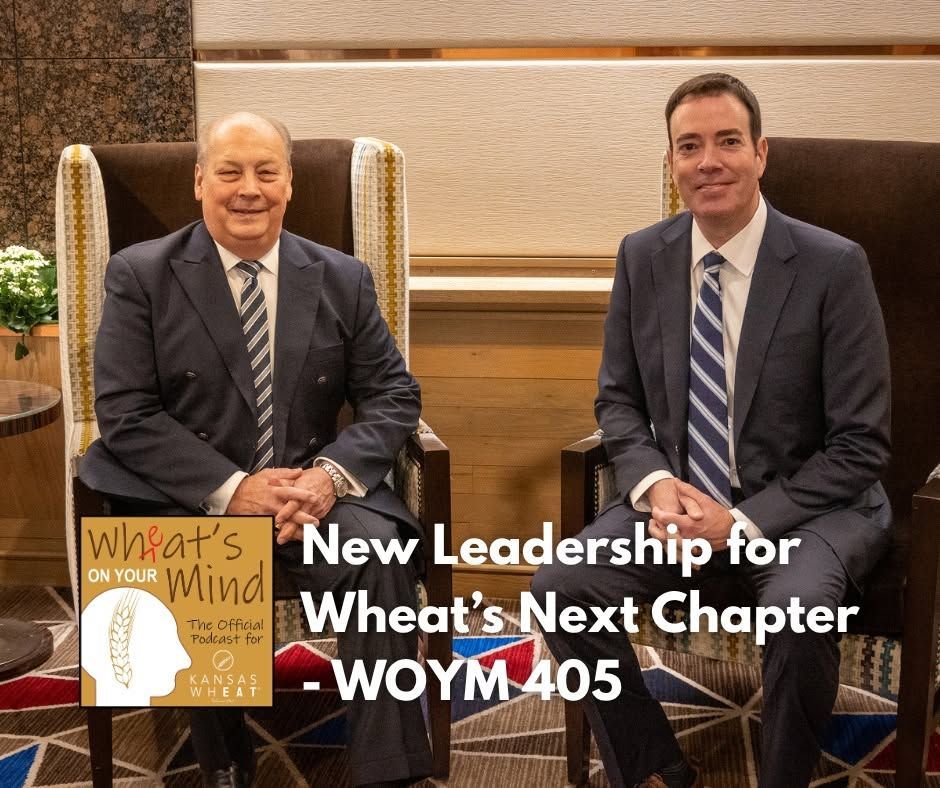 EP 405
New Leadership for Wheat’s Next Chapter
with Mike Spier
A short summary of what was discussed in this episode.
 EP 404
The Farm Impact of World Conflict
with Mike O’Dea, Josh Linville
Global conflict is colliding with farm economics in this episode of Wheat’s on Your Mind. Host Aaron Harries is joined by Mike O’Dea, risk management consultant at StoneX, and Josh Linville, vice president of fertilizer at StoneX, to unpack the fast-moving fallout from the Iran conflict and the closure of the Strait of Hormuz. Together, they explain why wheat prices were already moving higher before the latest geopolitical shock, how crude oil is adding fresh volatility, and why current rallies may create marketing opportunities for producers.<br><br>The discussion also explores the fertilizer side of the equation in detail. Linville explains how much of the world’s urea and phosphate trade depends on the Middle East, why the spring import window matters so much for U.S. growers, and how delayed buying patterns could worsen supply problems. O’Dea connects those fertilizer risks back to wheat production, protein, corn acres, and broader crop competition, offering listeners a grounded look at how global events can quickly reshape decisions at the farm gate.
 EP 403
80 Harvests After The Dust Bowl
with Don Keesling
Don Keesling has lived through 80 Kansas wheat harvests, and he remembers when harvest was a full-family operation—kids hauling water, older siblings driving trucks, and every load requiring real muscle. In this special episode, Don and host Aaron Harries walk through how wheat harvest used to work, the machinery transitions that changed everything, and why the culture of neighbors helping neighbors feels different today.<br><br>Don also shares his decades promoting wheat—especially hard white winter wheat—where taste tests and proof mattered more than talking points. From wheat varieties like Jagger to lessons from the Dust Bowl and the long road to conservation practices like no-till, Don’s stories connect Kansas wheat history to the realities farmers face now: tight margins, changing programs, and the need for practical skills (and a little WD-40).
 EP 402
World Fertilizer Prices, Kansas Wheat RealityEpisode Title
with Corey Rosenbusch
Fertilizer isn’t just an input—it’s a globally traded commodity with price signals driven by geopolitics, energy markets, and overseas demand. In this episode, Aaron Harries sits down with Corey Rosenbusch, president and CEO of The Fertilizer Institute, to unpack why fertilizer markets can feel like “three-dimensional chess,” especially for wheat producers balancing tight margins.<br><br>Rosenbusch explains how global trade flows shift when conflict disrupts supply chains and when natural gas availability changes the economics of nitrogen production. The conversation dives into why the U.S. is relatively strong in nitrogen production yet still imports key products, why potash remains heavily import-dependent, and how global demand—especially major buyers—can set price direction. He also stresses that while producers can’t control what happens in Beijing or on the Black Sea, they can control efficiency: the 4R framework (right source, rate, time, place), variable-rate strategies, and emerging technologies that help fertilizer go further.
 EP 401
The Woman Who Taught Kansas About Bread
with Cindy Falk
Cindy Falk has spent 40 years helping Kansas Wheat connect with consumers through recipes, baking demonstrations, nutrition education, and the beloved Kansas Wheat recipe booklet tradition. In this episode, host Aaron Harries chats with Cindy about her upbringing on a Kansas farm, the “Speak for Wheat” spokesperson program she helped grow, and the behind-the-scenes work of answering baking questions (and busting myths) with a calm, science-first approach.<br><br>You’ll also hear how the Kansas Festival of Breads evolved into the National Festival of Breads, turning home bakers into wheat ambassadors through harvest tours, mill visits, and live baking events. As Cindy steps into retirement, she shares what she’ll miss, what she hopes to do next, and leaves listeners with a simple truth that sums up her career: “Bread is the stuff of life.”
 EP 329
Old-School Milling, New-School Baking
with Brian Walker
Brian Walker didn’t start in a corner office—he started six weeks out of high school as a “sample jockey” in a flour mill, learning the business from union millers, lab mentors, and long days when the mill ran. More than 45 years later, his career spans Seaboard, Cargill, Ardent Mills, and Miller Milling—and he’s seen the milling industry transform through consolidation, shifting competition, and changing norms around sharing crop-quality information.<br><br>In this episode, Brian connects the dots from farm to flour to finished bread: how high-speed bakeries increased stress on dough performance, how ingredient/tool changes (like moving away from potassium bromate and toward enzymes) affected quality, why varieties and disease resistance became even more critical, and how “extended shelf life” reshaped the bread supply chain (and consumer expectations). He closes with practical career advice: work hard, get involved, and show up—because wheat is a people business.
 EP 328
2025 Review: Kansas Leads the Wheat Fight Again
with Derek Sawyer, Chris Tanner
2025 didn’t fit in a neat box for Kansas wheat farmers—it was “variability,” from a dry start to long stretches of wet weather that stretched harvest timelines and narrowed fieldwork windows. <br>Kansas Wheat Commission Chair Derek Sawyer and Kansas Association of Wheat Growers President Chris Tanner join host Aaron Harries and Kansas Wheat CEO Justin Gilpin to break down the year’s biggest storylines: how wheat checkoff dollars are invested, what advocacy work is happening in Topeka and Washington, and what’s changing in domestic and international markets.<br><br>On the market side, the conversation highlights both bright spots and headwinds—strong export pace and renewed market activity, alongside big global wheat crops pressuring prices. <br>The group also digs into one of the most important agronomic storylines of the year: widespread wheat streak mosaic virus pressure reaching farther across Kansas than many are used to seeing, and what that means for volunteer control, “green bridge” conversations, and variety development. <br>Looking to 2026, their focus stays on profitability—maximizing trade opportunities, doubling down on research and the Kansas Wheat Innovation Center, and building an environment where family farms can thrive, not just survive.
 EP 327
Weather Pivots, Wheat Profits, and What’s Next
with Brian Bledsoe
Meteorologist and climatologist Brian Bledsoe joins Wheat’s On Your Mind to reflect on the surprising weather turns of 2025 and what Kansas wheat producers should be watching as 2026 approaches. <br>With a strong soil moisture profile and a well-established crop across much of the state, Bledsoe explains why early-season dryness may not spell disaster — especially as global weather patterns begin to pivot.<br><br>The conversation dives deep into La Niña and El Niño transitions, historical analog years, polar vortex risks, and long-term climate oscillations shaping agriculture in the High Plains. <br>Bledsoe also shares insight on private weather services, AI-driven forecasting, and why communication — not just data — is critical for helping farmers make confident decisions in an unpredictable weather future.
 EP 326
From Classroom to Capitol: Flinchbaugh’s Legacy Lives On
with Dana Woodbury,Jay Armstrong
Dr. Barry Flinchbaugh taught generations of farmers, students and elected officials how to think about “alternatives and consequences” in agricultural policy—and he did it with a cigar, a squeaky voice and a room full of laughter. <br>In this episode, host Aaron Harries visits with Jay Armstrong of Armstrong Farms and Dana Woodbury, executive director of the Barry Flinchbaugh Center for Ag and Food Policy, about the man behind the legend and the new center created to carry his work into the future. <br>Jay shares road‑trip stories from his days as Flinchbaugh’s first teaching assistant and explains how their research and statewide meetings helped Kansas voters pass the constitutional change that moved farmland to use‑value appraisal, protecting farmers on the urban fringe.<br><br>Dana walks through the mission of the Flinchbaugh Center: engaging students, convening stakeholders, and bringing policymakers the straight facts on complex issues like property taxes, ag labor and water. <br>You’ll hear how the inaugural Flinchbaugh Forum packed a room with more than 200 people hungry for honest conversation, how a new grant is helping involve western Kansas high school students in Ogallala aquifer discussions, and how the Flinchbaugh Fellows program is building a pipeline of Kansas‑trained policy staff for both Topeka and Washington, D.C. <br>The episode closes with a look at the Center’s growing partnership with Kansas State University and how grassroots support can help keep Barry’s purple‑bleeding legacy alive for the next generation of rural leaders.
 EP 325
Farmer-Owned, Community Strong: Modern Co-ops
with Brian Briggeman, Ph.D.
Farmer cooperatives built much of the grain marketing and input-delivery system that Kansas farmers rely on today—but what does that system look like now, and where is it headed?
EP 324
Water, Wheat & What’s Next for Kansas
with Ryan Flickner
Senior Director of Advocacy at Kansas Farm Bureau—and sixth-generation producer—Ryan Flickner sits down with Aaron Harries to talk policy that actually touches the farm gate. From the Farm Bill stalemate and year-round E15 to trade philosophy and the real cost of inputs, Ryan shares how Kansas “punches above its weight” and why coalitions beat hot takes every time. He also lays out why protein’s a bright spot while row crops are tight, and how policy predictability drives long-term investment on the farm.<br><br>Then we get practical: rural apprenticeships that retain good hands, domestic well realities and water rights, and field-level innovation at Flickner Farms—from subsurface drip to 360 Rain and NASA’s FIAT project for identifying high-protein wheat zones. It’s a candid, Kansas-first look at risk, resilience, and the tools that help rural families keep farming.
 EP 323
Wheat, Weather, & Washington Woes
with Justin Gilpin
Kansas Wheat CEO Justin Gilpin sits down with Aaron Harries for a fast-paced, wide-ranging update on the state’s fall harvest and planting season. They cover it all — from field conditions and the importance of fall rains to how flexible winter wheat planting decisions can help farmers manage risk in a volatile market. Justin also shares insights on the ripple effects of the federal government shutdown on agriculture, from export data to USDA research activity.<br><br>The episode also celebrates the story behind the new KS Bill Snyder wheat variety — a tribute to legendary K-State coach Bill Snyder and a symbol of Kansas innovation and rural pride. Hear how Kansas leadership is influencing national wheat policy, how U.S. exports are finding fresh markets in Nigeria and Asia, and why global trade ties matter for every farmer in the heartland.
 EP 322
Four Crops, One Mission: How Kansas Agriculture Stays Strong
with Justin Gilpin, Josh Roe, Caleb Little, Adam York
In this special round-table edition of Wheat’s On Your Mind, host Aaron Harries welcomes the CEOs of Kansas Wheat, Corn, Soybeans, and Sorghum — Justin Gilpin, Josh Roe, Caleb Little, and Adam York. <br><br>Together, they unpack how Kansas’ checkoff and grower associations function, where the dollars go, and how their unified efforts help strengthen markets, research, and advocacy for farmers across the state.<br><br>From tackling low commodity prices to building new international markets and investing in next-generation crop research, these leaders share candid perspectives on what’s working — and what’s keeping them up at night. <br><br>They also discuss Kansas’ leadership in sustainability, the farm bill’s slow rollout, and how farmers are adapting to water and policy challenges. <br><br>It’s an insider’s look at how collaboration keeps Kansas agriculture resilient, relevant, and rooted in the future.
 EP 321
Why Wheat Still Matters: Economic Realities with Tanner Ehmke
with Tanner Ehmke
When crop prices are down and input costs are still sky-high, how are farmers deciding what to plant? <br><br>In this episode of Wheat’s on Your Mind, host Aaron Harries talks with Tanner Ehmke, Lead Economist at CoBank, about the tough decisions producers are making right now. <br><br>Tanner breaks down why wheat still plays a role in many rotations, even when margins are razor-thin. <br><br>He also explains how export demand—especially from Mexico—is offering a rare bright spot in an otherwise challenging outlook for grains.<br><br>From the impact of tariffs and fertilizer costs to the long-term future of wheat in drought-prone areas, Tanner offers insights that blend market analysis with on-the-ground understanding. <br><br>You’ll also hear how Farm Credit lenders and co-ops are adapting, what global players like Russia and Australia mean for U.S. producers, and what financial warning signs are flashing as we head into 2026. <br><br>It’s an episode full of clarity, context, and common sense for rural and ag-focused listeners.
 EP 320
Farm to Pharma: Biotech Roots in Rural Kansas
with Brandi Miller, Chris Miller, Ph.D.
Tritica Biosciences, a rural Kansas startup founded by Brandi and Dr. Chris Miller, is turning heads—and wheat germ—into revolutionary biotech. <br><br>Backed by a $29 million grant from ARPA-H, their mission is to create shelf-stable, cell-free protein synthesis platforms using Kansas-grown wheat. <br><br>Imagine insulin production powered by wheat embryos, all done on-site and without needing traditional bioreactors. <br><br>It’s happening just east of Manhattan, Kansas.<br><br>What began in a 100-square-foot lab in a converted barn is now a scalable biotech enterprise with a 10,000+ square-foot facility, multiple partners, and global potential. <br><br>In this episode of Wheat’s On Your Mind, the Millers explain the science, the story, and the significance behind their work. <br><br>From food security to pharmaceuticals, this is a game-changing look at wheat’s future beyond the grain bin.
 EP 319
Boost Bushels & Bragging Rights: Your Guide to the Wheat Yield Contest
with Anne Osborne
In the latest Wheat’s On Your Mind podcast, Aaron Harries chats with Anne Osborne, Executive Director of the National Wheat Foundation, about the value and impact of the National Wheat Yield Contest. <br>Anne shares how the contest encourages U.S. wheat farmers to push for both higher yields and better quality, while also promoting innovation through tools like digital yield submissions. <br>Whether you're in spring or winter wheat country, irrigated or dryland, there's a category for you—and the contest could even improve your long-term productivity.<br><br>Anne also gives us a look into the other initiatives driven by the National Wheat Foundation, from leadership development to on-farm education for congressional staff. <br>She shares inspiring stories of Kansas farmers and how contest data is shaping best practices across the country. <br>Tune in to learn how you can participate, what to expect, and why growing great wheat isn’t just possible—it’s happening now.
 EP 318
Trade Deals, Tariff Troubles, and Wheat Strategy
with Dalton Henry, Jstin Gilpin
This week on Wheat’s On Your Mind, host Aaron Harries sits down with two familiar voices—Justin Gilpin from Kansas Wheat and Dalton Henry of U.S. Wheat Associates—for a frank and timely discussion on the state of wheat trade. <br>With wheat prices low and global competition heating up, the conversation covers everything from rising exports of hard red winter wheat to shifting relationships with key buyers like China, Indonesia, and Bangladesh.<br><br>They also dig into the behind-the-scenes work that’s keeping U.S. wheat in the game—from tackling non-tariff barriers to navigating complex shipping rules and trade negotiations. Whether it’s potential peace in the Black Sea, tariff impacts, or how the U.S. can reclaim ground in overseas markets, this episode lays out the big picture and the fine print. If you grow wheat, ship it, sell it, or just want to understand the forces shaping your market, this one’s for you.
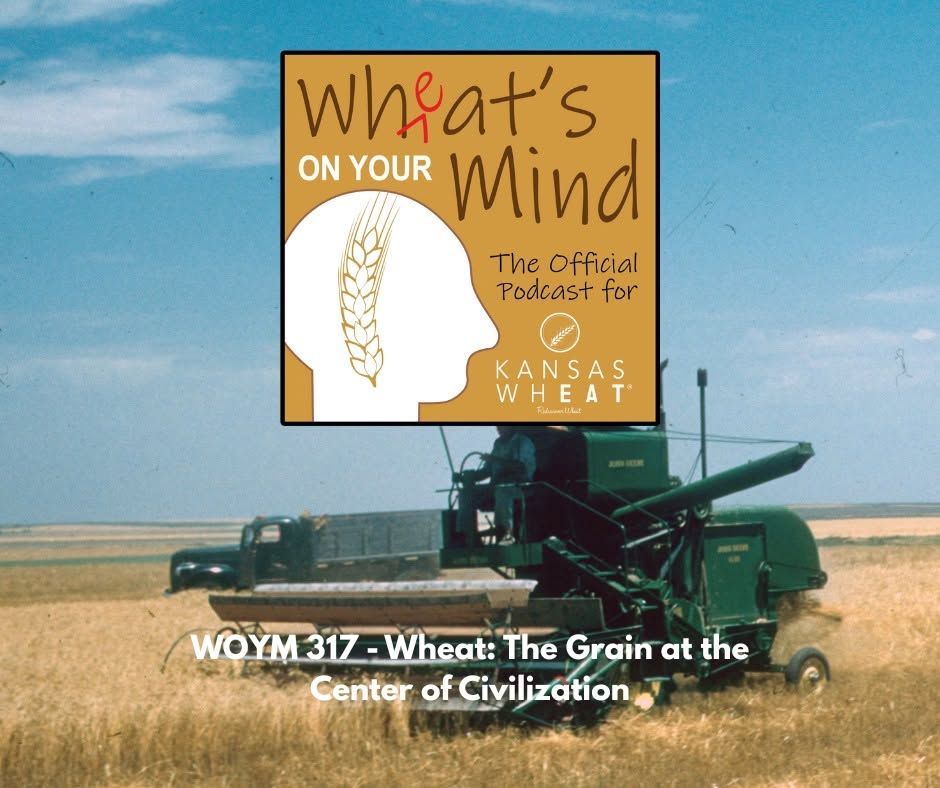 EP 317
Wheat: The Grain at the Center of Civilization
with Rachel Laudan
In this special episode, Aaron Harries speaks with renowned food historian Rachel Laudan about the deep roots of wheat in human civilization. Growing up on a farm near Stonehenge, Rachel’s unique background—combined with her expertise in history, science, and philosophy—provides a rich and thoughtful perspective on how wheat shaped the rise of empires, economies, and everyday life. Rachel unpacks how early humans learned to transform difficult, scratchy seeds into food, why processing grain was historically women's labor, and how wheat became the backbone of global nutrition and political power.<br><br>From ancient metates in Mesoamerica to the industrial roller mills of the 19th century, this conversation dives deep into the story of how wheat evolved from a wild seed to a symbol of civilization. Rachel also sheds light on the politics of white bread, the muscle power of grain grinders, and how wheat’s utility in food security shaped empires from Rome to modern America.
 EP 316
David Schemm, Kansas FSA
with David Schemm
In this episode of Wheat’s On Your Mind, Aaron Harries sits down with David Schemm, the newly reappointed State Executive Director of the USDA’s Farm Service Agency in Kansas. Schemm reflects on his previous term and outlines a renewed mission rooted in productivity, tradition, and long-term impact. Drawing from his background as both a policymaker and a farmer, he emphasizes the importance of delivering efficient services while modernizing operations to better support Kansas producers.<br><br>They dive into the challenges of leading through the COVID pandemic, the implementation of evolving technology, and the uncertain future of the current farm bill. Schemm also shines a light on underused FSA programs like TIP and FSFL that can offer real value, especially to beginning farmers. This is a must-listen for anyone involved in agriculture policy or daily farm operations.
 EP 315
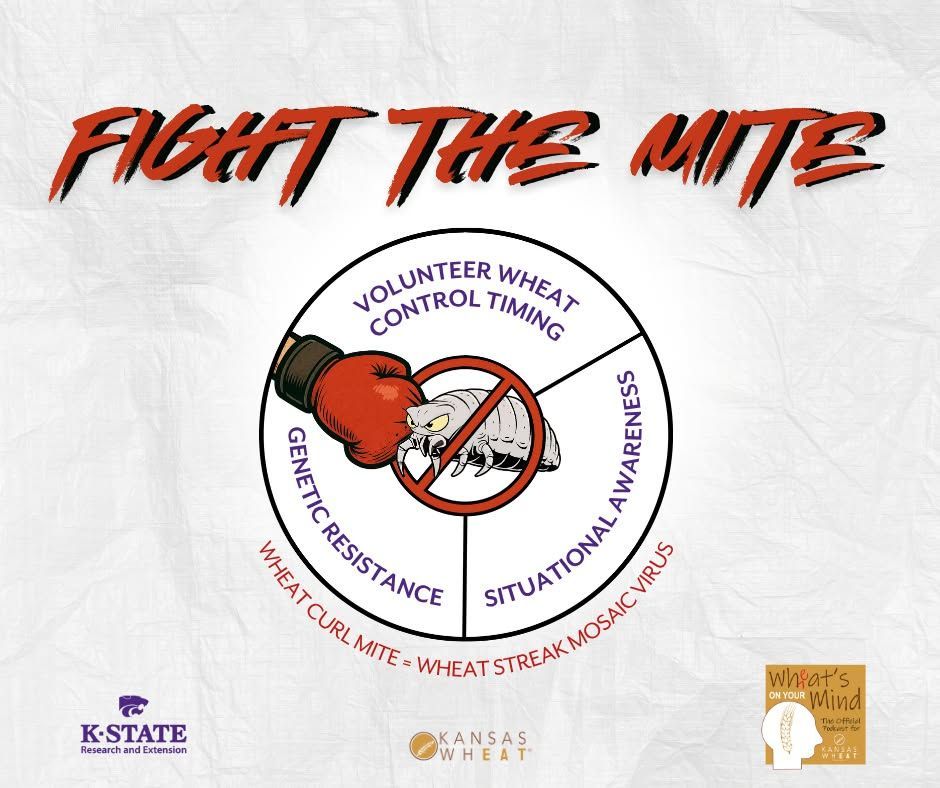
FIGHT THE MITE
with Kelsey Andersen Onofre Ph.D., Romulo Lollato, Ph.D.
The 2025 wheat growing season in Kansas will go down as one of the most challenging in recent memory, with widespread viral disease pressure affecting crops statewide. <br>In the latest episode of Wheat’s On Your Mind, host Aaron Harries is joined by Kansas State University experts Dr. Kelsey Andersen Onofre and Dr. Romulo Lollato to explain why and how this viral outbreak took hold. <br>From the biological intricacies of the wheat curl mite to the nuances of symptom onset and misdiagnosis, they break down what really happened and why traditional solutions like fungicides didn’t work.<br><br>Farmers are encouraged to act early—well before planting—to mitigate these viruses. <br>This means aggressively managing volunteer wheat, being mindful of green bridge hosts, and choosing wheat varieties with known resistance genes. <br>Listeners will also learn how to send samples to the K-State Diagnostic Lab for accurate identification, which will help prevent another viral outbreak in 2026. <br>This episode is a must-hear for producers and ag professionals looking to prepare effectively for the upcoming planting season.
EP 314
POST PODCAST POWWOW
with Justin Gilpin
In this episode of Wheat’s On Your Mind, Arron Harries and Justin Gilpin regroup after their insightful conversation with Senator Jerry Moran to unpack the latest in ag policy and harvest developments. With the recent reconciliation bill pushing key wins for Kansas agriculture—including improved crop insurance, better ARC/PLC guarantees, and funding boosts for wheat export programs—this episode offers clear, actionable updates for producers and stakeholders. They also touch on USDA’s revised harvest projections, which reflect a diverse year in the field thanks to disease pressure from wheat streak mosaic and late-season rains.<br><br>Listeners also get a broader view of U.S. wheat's role globally, with news of a promising new trade agreement with Indonesia and the ongoing strategic importance of food aid programs like Food for Peace. The episode wraps with a spirited discussion on how the industry can counter high-profile misinformation about bread. Whether you're wrapping up harvest or planning for fall planting, this episode delivers valuable insights and timely reminders to help keep wheat top of mind.
 EP 313
SENATOR JERRY MORAN
with U.S. Senator Jerry Moran
In this special episode of Wheat’s On Your Mind, Kansas U.S. Senator Jerry Moran joins Justin Gilpin and host Arron Harries to dive into the latest developments affecting wheat producers and rural Kansans. The trio breaks down the July 4th reconciliation bill, including major wins for agriculture—particularly the updated reference prices in Title I of the Farm Bill and expanded crop insurance options for producers. Senator Moran provides an insider’s look at how the reconciliation process enabled faster action, while also discussing the long-term impact of the newly secured disaster relief funding and broader economic support for rural communities.<br><br>The conversation expands to cover national security, food aid, and export strategy, emphasizing the global importance of Kansas-grown wheat. Moran highlights programs like Food for Peace and McGovern-Dole, linking moral responsibility with economic benefit. From tariff negotiations to healthcare and rural hospital support, this episode blends ag policy and big-picture strategy in a way that's both practical and powerful for wheat growers and rural advocates.
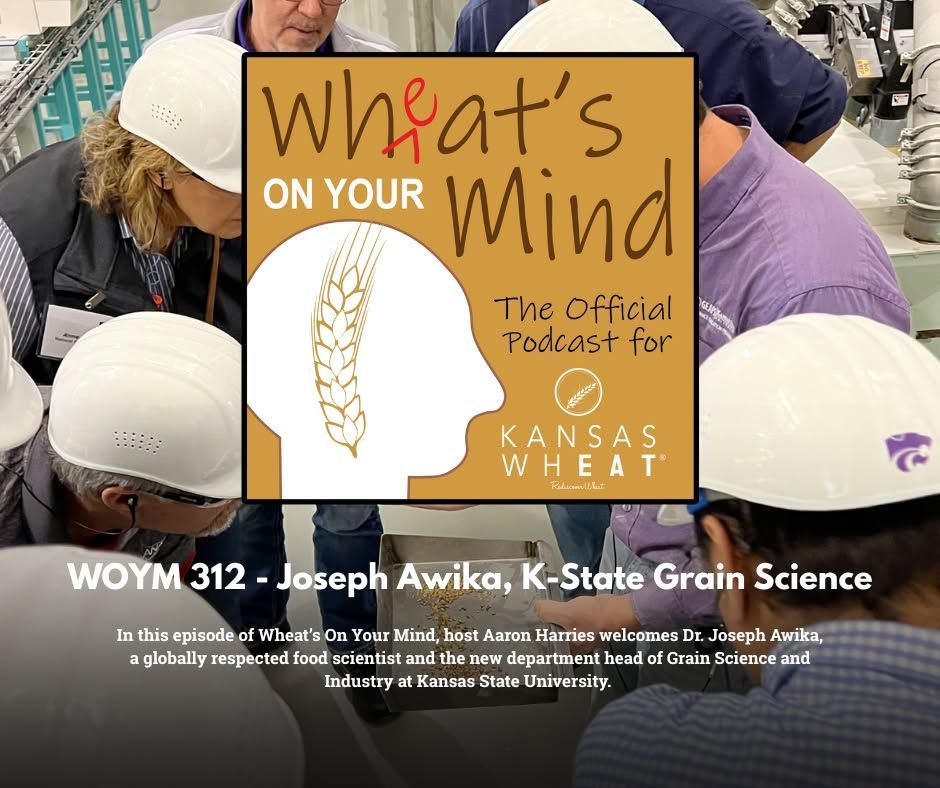 EP 312
JOSEPH AWIKA, K-STATE GRAIN SCIENCE
with Joseph Awika, Ph.D.
In this episode of Wheat’s On Your Mind, host Aaron Harries welcomes Dr. Joseph Awika, a globally respected food scientist and the new department head of Grain Science and Industry at Kansas State University. From his early days in Kenya to directing cutting-edge research in Texas and now Kansas, Dr. Awika brings a unique perspective to advancing grain science. He shares how his work focuses on making grain-based foods healthier, why polyphenols are important, and what the upcoming Global Center for Grain and Food Innovation will mean for students, the industry, and the future of food.<br><br>Listeners will also learn about the challenges of recruiting students into agricultural science, the merging of food science with grain science, and why industry collaboration is central to K-State’s future strategy. It’s an inspiring look into how one leader is reshaping an entire academic field from the ground up—literally.
 EP 311
POLICY, PROTEIN & POTENTIAL: WHEAT'S BUSY SEASON
with Justin Gilpin
In this timely episode of Wheat's On Your Mind, host Aaron Harries catches up with Kansas Wheat CEO Justin Gilpin during a fast-paced and weather-challenged harvest season. From scorching temperatures and high winds to the push to beat the rain, Kansas farmers are experiencing one of the most variable harvests in recent memory. Gilpin shares insights from across the state, noting both the challenges in drought-stressed regions and the surprising successes in the southwest, forecasting a statewide yield between 330 to 350 million bushels.<br><br>Justin also provides a behind-the-scenes look at global market dynamics, with Kansas Wheat actively pursuing opportunities in Asia, Africa, and South America. He discusses recent trade missions, the return of U.S. wheat to markets like South Africa, and the strengthening of relationships with millers from Brazil to Vietnam. As international buyers look to U.S. wheat for reliability and quality, Kansas stands ready to meet the call. <br><br>Gilpin closes with an update on critical policy discussions in Washington, D.C., including food aid programs, farm bill negotiations, and the importance of the Kansas Wheat Innovation Center. With cutting-edge research, strong partnerships, and farmer-led investment, Kansas is not only growing wheat but also growing the future.
 EP 310
ON THE ROAD AGAIN...
with Lyle Friesen
In this episode of the Wheat's on Your Mind Podcast, Aaron Harries talks with Lyle Friesen of Friesen Harvesting—a third-generation, family-run custom harvesting business based in Meade, Kansas. <br>Starting with humble roots in 1949, Lyle shares how the operation has grown to include modern John Deere combines and Kenworth trucks, all while maintaining deep-rooted family values and relationships with customers, including one family they've harvested for since the beginning. <br>You'll get an insider’s view of the logistical and agricultural challenges of a northbound harvest route stretching from Oklahoma to Montana. <br><br>The conversation touches on the realities of wheat production across states, crop conditions, equipment evolution, and the often-overlooked difficulties of running a mobile business. <br>Lyle provides candid insights into the labor challenges, the pressure of working with increasingly narrow harvest windows, and why new wheat varieties are changing the custom harvesting landscape. <br>Whether you're in agriculture or simply curious about the lives behind your daily bread, this episode delivers a rich slice of wheat country life.
 EP 309
Ben Brown
with Dr. Sarah Chen
We sit down with an AI researcher to discuss how artificial intelligence is quietly reshaping the tools we use every day, from smart assistants to healthcare.
 EP 308
A Food Aid Journey
with Peter Laudeman, Jusin Gilpin
In this powerful episode of Wheat’s On Your Mind, Peter Laudeman of U.S. Wheat Associates and Justin Gilpin of Kansas Wheat take listeners on a firsthand journey through East and Southern Africa, where U.S.-grown wheat becomes a lifeline for hundreds of thousands. <br>From witnessing heartbreaking ration cuts at the Kakuma refugee camp near the South Sudan border to observing port logistics in Mombasa, they share stories that illuminate the vital role American wheat plays in global food aid. <br>Their reflections are both emotional and eye-opening, connecting Kansas farmers to the faces and lives their wheat feeds across the world.<br><br>But the journey doesn't stop there. <br>In Lesotho, the pair unexpectedly find themselves amid diplomatic conversations following a major U.S. tariff announcement, turning their visit into a lesson on the complex intersection of trade, aid, and agricultural diplomacy. <br>They wrap up their mission in Cape Town at the Sub-Saharan Buyers Conference, where the conversation shifts to future market opportunities for hard red winter wheat. <br>Whether you're a grower, policy enthusiast, or just curious about the global reach of Kansas wheat, this episode offers rare insight into the human impact of agricultural exports and the critical need for strong, stable food aid programs.
 EP 307
The Voice of The Plains
with Kyle Bauer
In this episode of Wheat’s On Your Mind, we sit down with Kyle Bauer, a Kansas broadcasting trailblazer whose farm-focused radio stations reach thousands across the Plains. What started as a philanthropic rescue of a failing FM station has evolved into a multi-state network—driven by locally produced content, deep community roots, and a commitment to serving both listeners and advertisers with heart and precision.<br><br>Kyle shares the behind-the-scenes mechanics of ag radio, from staffing strategies and flexible programming to why young farmers tune in once they hit 28. He also sounds the alarm on the threat to AM radio in newer vehicles and explains how stations like his remain essential lifelines for rural communities. Whether you're passionate about media, farming, or both—this is a must-listen episode.
 EP 306
The Link Between Grain and Goodness
with Jane DeMarchi
In this episode of Wheat’s On Your Mind, host Aaron Harries chats with Jane DeMarchi, president of the North American Millers Association, about the evolving world of wheat, oats, and corn milling. <br>Jane shares her deep family ties to the baking industry and how NAMA is helping millers navigate everything from pandemic-era disruptions to new FDA food safety rules. <br>With the rising demand for snack foods and fortified flour, millers are adapting to a rapidly shifting consumer landscape while maintaining their essential role in the grain supply chain.<br><br>Jane also discusses key policy priorities, including Farm Bill research programs, regenerative agriculture, and GMO wheat adoption. <br>As more companies invest in mill modernization and specialized grain products, she emphasizes the importance of collaboration across the entire grain chain—from farmers to bakers. <br>Whether you’re in agriculture, food policy, or just care about what’s in your bread, this episode is packed with insights on where the industry is heading.
 EP 305
Building a Better Wheat Plant
with Allan Fritz, Ph.D.
In this episode, we sit down with K-State wheat breeder Dr. Allan Fritz, a familiar name to many Kansas wheat growers, to talk about the science behind stronger wheat and better protein. Dr. Fritz shares insights from decades of research focused on improving protein and gluten strength—work that’s directly tied to wheat varieties grown right here in the Central Plains. We dig into the story behind the BX7OE protein, a powerful trait first identified in Red River 68 and rooted in the Canadian super strong wheat class, now reshaping how we think about protein and yield.
 EP 304
Never Alone
with Alicia Boor
In this episode, Aaron welcomes Alicia Boor, an agriculture and natural resources agent in the Cottonwood District in Kansas, and a vital member of the K State Research and Extension's Stress and Resiliency Team. <br>Alicia's work focuses on providing educational resources on stress, stress management, and resilience, particularly within the agricultural community. <br>Her efforts are crucial in addressing the unique challenges faced by farmers, who often experience high levels of stress due to the demanding and unpredictable nature of their profession.
 EP 303
Wheat: Beyond the Value of the Grain, Part 2
with Romulo Lollato, PH.D.
We explore how winter wheat contributes to improved crop yields, soil moisture conservation, and effective weed and disease management, drawing from K-State's long-term studies that demonstrate the benefits of winter wheat in enhancing the productivity and sustainability of cropping systems in Kansas.
 EP 302
Happy Trails Vince
with Dr. Sarah Chen
We sit down with an AI researcher to discuss how artificial intelligence is quietly reshaping the tools we use every day, from smart assistants to healthcare.
 EP 301
Get To Know Guorong
with Guorong Zhang, Ph.D.
Dr. Guorong Zhang has been the Western Kansas wheat breeder for Kansas State University since 2012. <br>His journey to Western Kansas began in the Far East. <br>Guorong tells Aaron about his upbringing on a small farm in China and describes the path he took to become a wheat breeder. <br>He also gives us insight into his current program, including new varieties in the pipeline.
 EP 224
2025 Weather Outlook
with Bret Walts
Bret Walts with BAM Weather joins Aaron to give his outlook for the remainder of the Kansas winter and a preview of the coming spring.<br><br>His insights into the current climatic conditions affecting Kansas wheat production and the recent historical weather events showcase his expertise in the field.<br><br>They discussed the critical role of weather forecasting in agriculture, recent weather patterns in Kansas, and the influence of climate oscillations like the Madden Julian Oscillation and La Niña on agricultural outcomes.
 EP 223
Shrinkage
with Jeff Whitworth, Ph.D.
Think small for this episode. <br>The emerging world of nanotechnology has many possible applications in the agricultural industry. <br>K-State researchers are investigating ways to deliver pesticides and fertilizers to plants at the micro-level. <br>Dr. Jeff Whitworth joins Aaron to discuss the research and its potential applications for wheat.
 EP 222
Plum Creek Farms
with Justin Ochs, Jason Ochs
Jason and Justin Ochs from Syracuse, Kansas are guests on this episode. The brothers talk about the beginnings and evolution of their farm in Western Kansas.<br>The two share their perspectives on the challenges posed to farmers in the High Plains of the U.S. Labor, technology and sustainability are among the topics discussed.
 EP 221
A Look Back at 2024
with Justin Gilpin
Kansas Wheat CEO, Justin Gilpin joins Aaron to look back at the 2024 wheat calendar year. They talk about the 2024 crop and some of the major events in the wheat industry including the dawning era of GMO wheat. Justin also shares his thoughts on the current state of the global wheat marketplace.
 EP 220
LEAVING YOUR WHEAT LEGACY
with TAMMY MCCLELLAN
Do you live and breathe wheat?<br>It’s the time of year when we tend to donate to causes that we are passionate about. For many people, wheat significantly impacts their livelihood. <br>Even if you don’t pay the wheat checkoff, you can support wheat research. <br>The Kansas Wheat Commission Research Foundation provides that opportunity. <br>Listen to this episode to learn more about the foundation, its goals, and the multiple ways that you can support wheat research.
 EP 219
WHEAT: VALUE BEYOND THE VALUE OF THE GRAIN
with Romulo Lollato, Ph.D.
Kansas Wheat kicks of a new campaign with this episode of the podcast – Wheat: Beyond the Value of The Grain. <br>Winter wheat brings so much to the cropping system beyond the value received for the price of the grain. <br>K-State’s Romulo Lollato has completed research that examines and quantifies those additional benefits. <br>On this episode, Romulo introduces the campaign and begins by talking about the versatility of winter wheat.
 EP 218
WHEATFLUENCERS: REDEFINING WHEAT FOODS IN THE PUBLIC EYE
with Tim O'Conner
In this episode, we talk with Tim O'Conner about the Wheat Foods Council’s mission to fuel demand for U.S. wheat, set the record straight on enriched wheat foods, and bring in voices from the fields and the kitchens. <br><br>With insights from fitness pros, top chefs, and straight-talking wheat experts, we’re changing how folks view wheat—from farm to table. <br><br>Join us and see how your hard work in the field is helping reshape America’s appetite for wheat.
 EP 217
AMERICAN ROYALTY
with Jackie McCluskey
A few days ago, Aaron Harries had the pleasure of speaking with Jackie McCluskey, the President and CEO of the American Royal. <br>With a rich background in agricultural economics and animal science, Jackie has been instrumental in steering the organization through significant changes, including the impact of COVID-19 and the exciting relocation of the American Royal to a new facility. <br>Her insights on the importance of agricultural education and community engagement are changing the way the public engages with the agriculture world.
 EP 216
A VISIT WITH SECRETARY BEEM
with Mike Beam
In this episode, Aaron Harries speaks with Mike Beam, the Secretary of Agriculture for Kansas. <br>With a strong background in agricultural advocacy, including his previous role at the Kansas Livestock Association, <br>He leads the Kansas Department of Agriculture (KDA), focusing on regulatory oversight, educational initiatives, and consumer protection, particularly in food safety and water resource management.
 EP 215
GMO WHEAT – THE TIME HAS COME
with Dalton Henry
In this episode, Aaron Harries talks with Dalton Henry, the Vice President of Policy at U.S. Wheat Associates, and Peter Laudman, the Director of Trade Policy at U.S. Wheat Associates. <br>Together, they bring a wealth of experience in agricultural policy and trade, focusing on the implications of new technologies in the wheat industry. <br>Their insights shed light on the evolving landscape of wheat consumption and production in the U.S., as well as the regulatory challenges and opportunities that lie ahead.
 EP 214
LET’S GO VIRAL, KELSEY ANDERSEN ONOFRE
with Kelsey Andersen Onofre, Ph.D.
In this episode, Kelsey Andersen Onofre with Kansas State University, reviews the major disease pest issues of the recent 2024 Kansas wheat harvest. <br>She says it was an unusual year with some diseases migrating out of their normal geographic territories. <br>Kelsey also shares best management practices as farmers head into winter wheat planting season.
 EP 213
MARKETS WITH MATT
with Matt Hines, Justin Gilpin
Aaron Harries and Justin Gilpin had the pleasure of speaking with Matt Hines, a licensed commodity broker from Loewen and Associates. <br>Their conversation delved into the intricate world of grain marketing, risk management, and the global dynamics affecting wheat producers. <br>Matt emphasized the importance of understanding market factors and developing effective marketing strategies to ensure profitability in an ever-changing landscape.
 EP 212
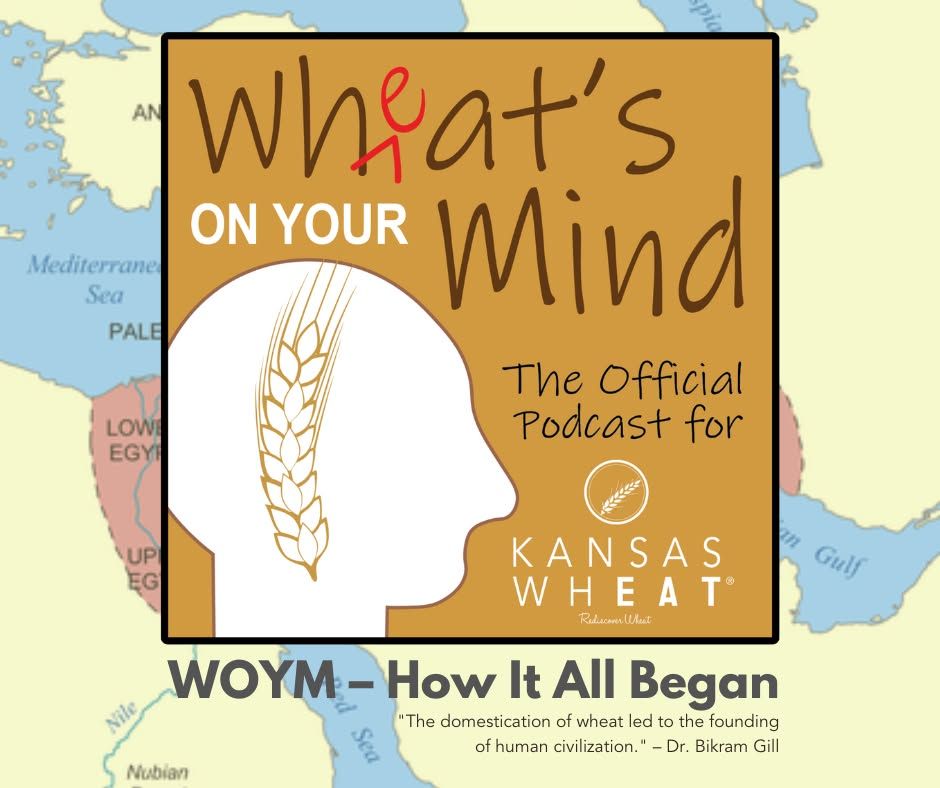
HOW IT ALL BEGAN
with Bikram Gill, Ph.D. and John Raupp, Ph.D.
Long, long ago (10,000 years) in a land far, far away, bread wheat came into existence. <br>But how?<br>Bikram Gill, Ph.D. and John Raupp, Ph.D., with Kansas State University share the fascinating story on this episode. <br>Learn more about wheat’s ancient grass relatives and why wheat is more genetically complex than humans. <br>Bikram, and John also explain the Wheat Genetics Resource Center and its role in leveraging ancient wheat genetics to improve modern-day bread wheat varieties.
 EP 211
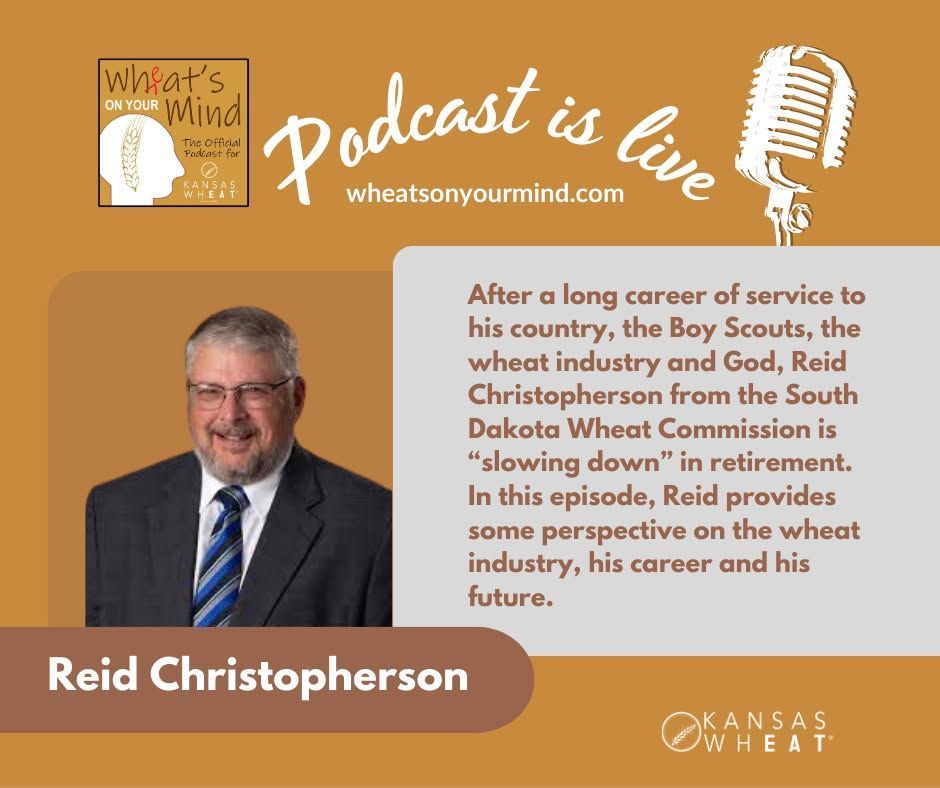
PLAYING CATCH UP WITH REID
with Reid Christopherson
After a long career of service to his country, the Boy Scouts, the wheat industry and God, Reid Christopherson from the South Dakota Wheat Commission is “slowing down” in retirement.<br>In this episode, Reid provides some perspective on the wheat industry, his career and his future.
 EP 210
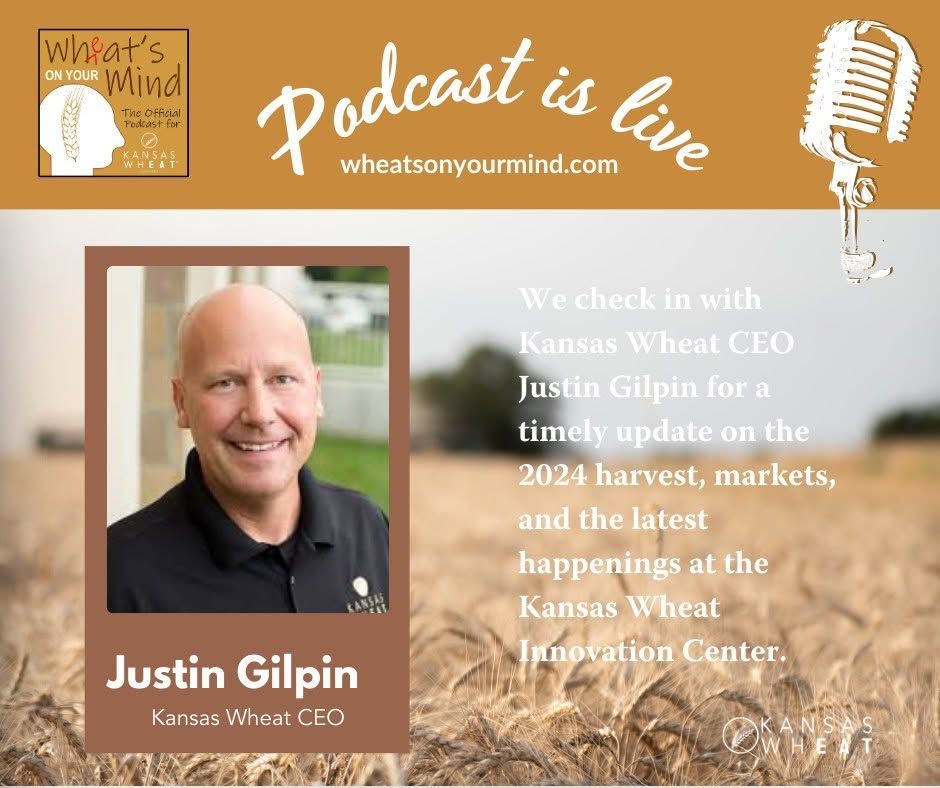
The Future of AI in Everyday Life
with Justin Gilpin
We check in with Kansas Wheat CEO Justin Gilpin for a timely update on the 2024 harvest, markets, and the latest happenings at the Kansas Wheat Innovation Center. <br><br>Aaron and Justin also visit about the value that wheat brings to the crop rotation.
 EP 209
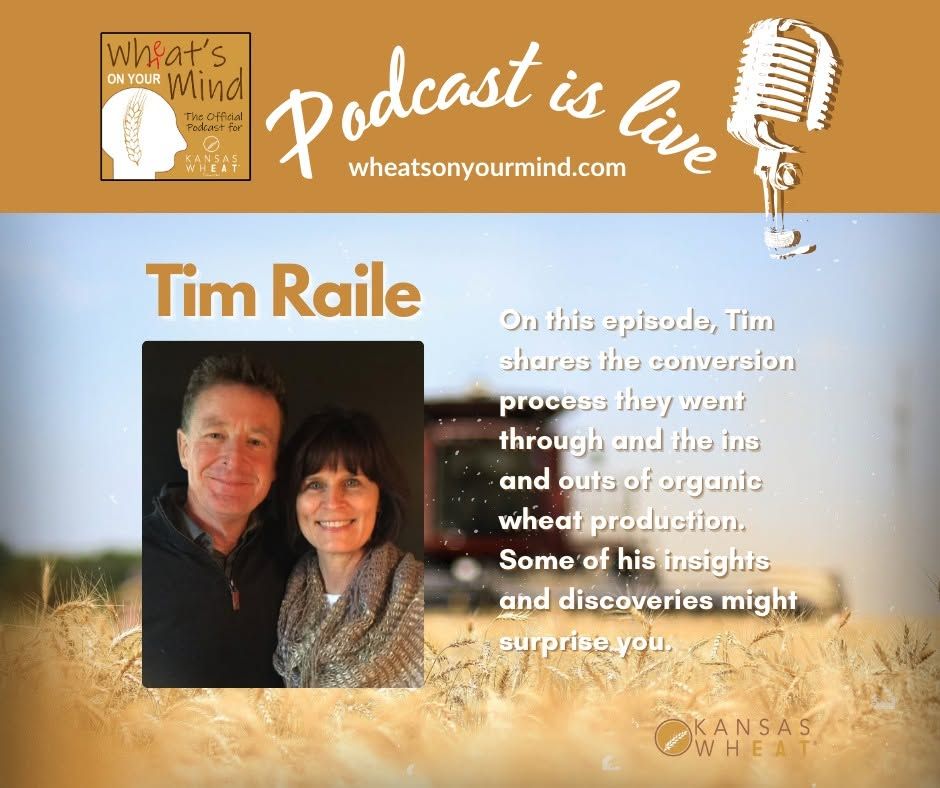
ORGANIC GROWTH
with Tim Raile
Tim Raile is a wheat grower from St. Francis Kansas who has transitioned all his farm’s wheat production from conventional to organic.<br>On this episode, Tim shares the conversion process they went through and the ins and outs of organic wheat production. Some of his insights and discoveries might surprise you.
 EP 208
JON RICH, AGRIPRO WHEAT
with Jon Rich
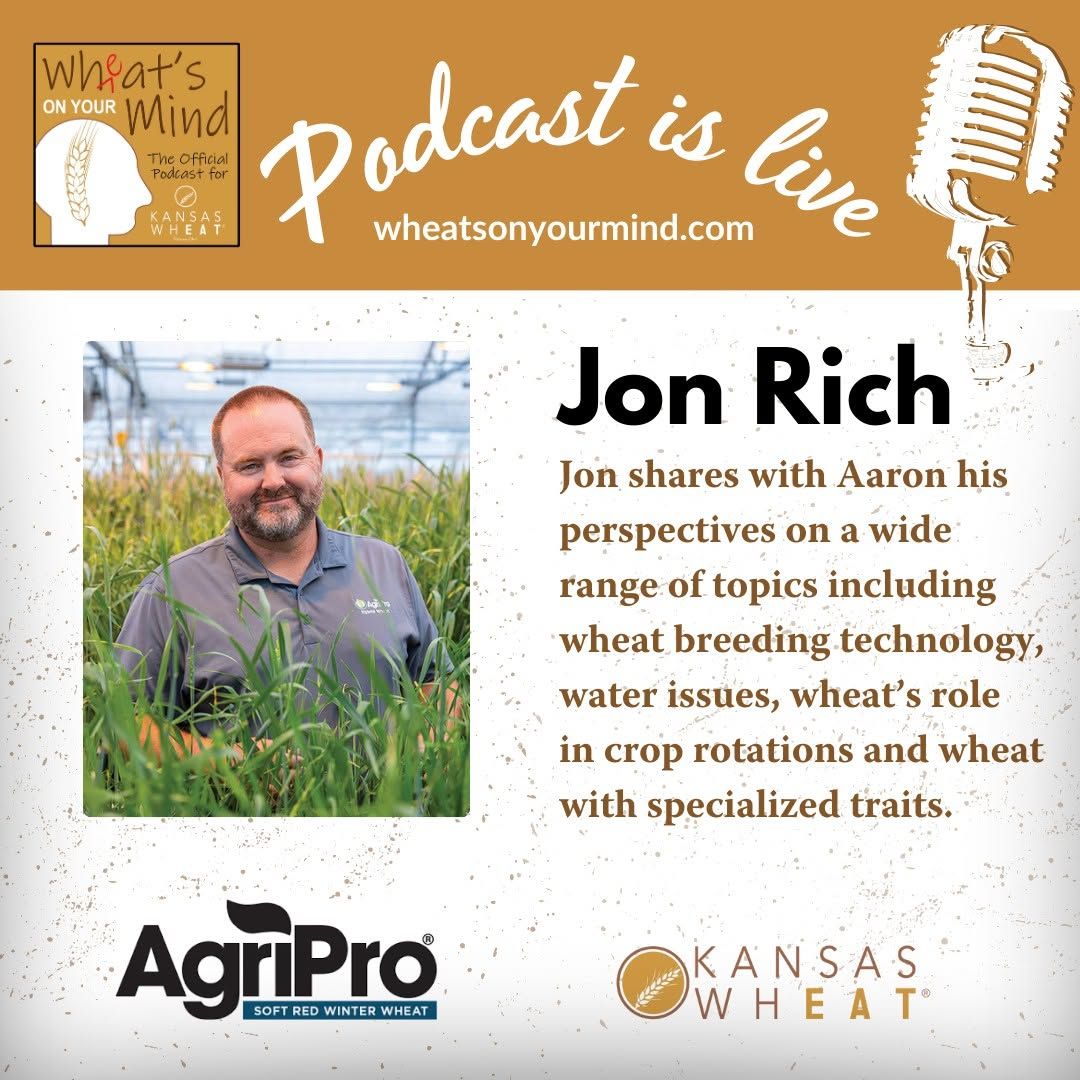
Jon Rich is a legacy wheat breeder with a strong family background in the wheat seed industry. <br>On this episode, Jon shares with Aaron his perspectives on a wide range of topics including wheat breeding technology, water issues, wheat’s role in crop rotations and wheat with specialized traits. <br>He also updates us on the latest with hybrid wheat and talks about his hopes for the next generation of wheat breeders.
 EP 207
GROWING WHEAT (TRIGO) IN BRAZIL
with Andre Rosa, Ph.D.
Brazilian wheat breeder Andre Rosa joins Aaron on this episode to share information about growing wheat in Brazil. <br>Andre explains his connections to Kansas State University and provides his perspective on the future of wheat production in Southern Brazil.
 EP 206
A BRAZILIAN REASONS WHY
with Kansas Farmers
In February 2024, the Kansas Agriculture and Rural Leadership Program hosted an agriculture tour of Brazil. <br>The group of 40 travelers spent 12 days exploring different sectors of the massive Brazilian agriculture industry. <br>On this episode, several farmer-attendees from that tour join Aaron to give their perspective on Brazilian agriculture and how it may impact farmers in the U.S.
 EP 205
THE PODCAST ABOUT A PODCAST, AGRO CONNECTION
with Carlos Pires
What started as a podcast to teach Brazilian farmers about American agriculture has evolved into a venture that connects people who want to push the boundaries of knowledge about agriculture. <br>Agro Connection is a team of young, Brazilian agriculture scientists that produces podcasts, social media and guide specialized international agriculture tours. <br>Carlos Pires, one of the founders of Agro Connection, tells us more on this episode.
 EP 204
GONE WITH THE WIND
with Ken and Deb Wood
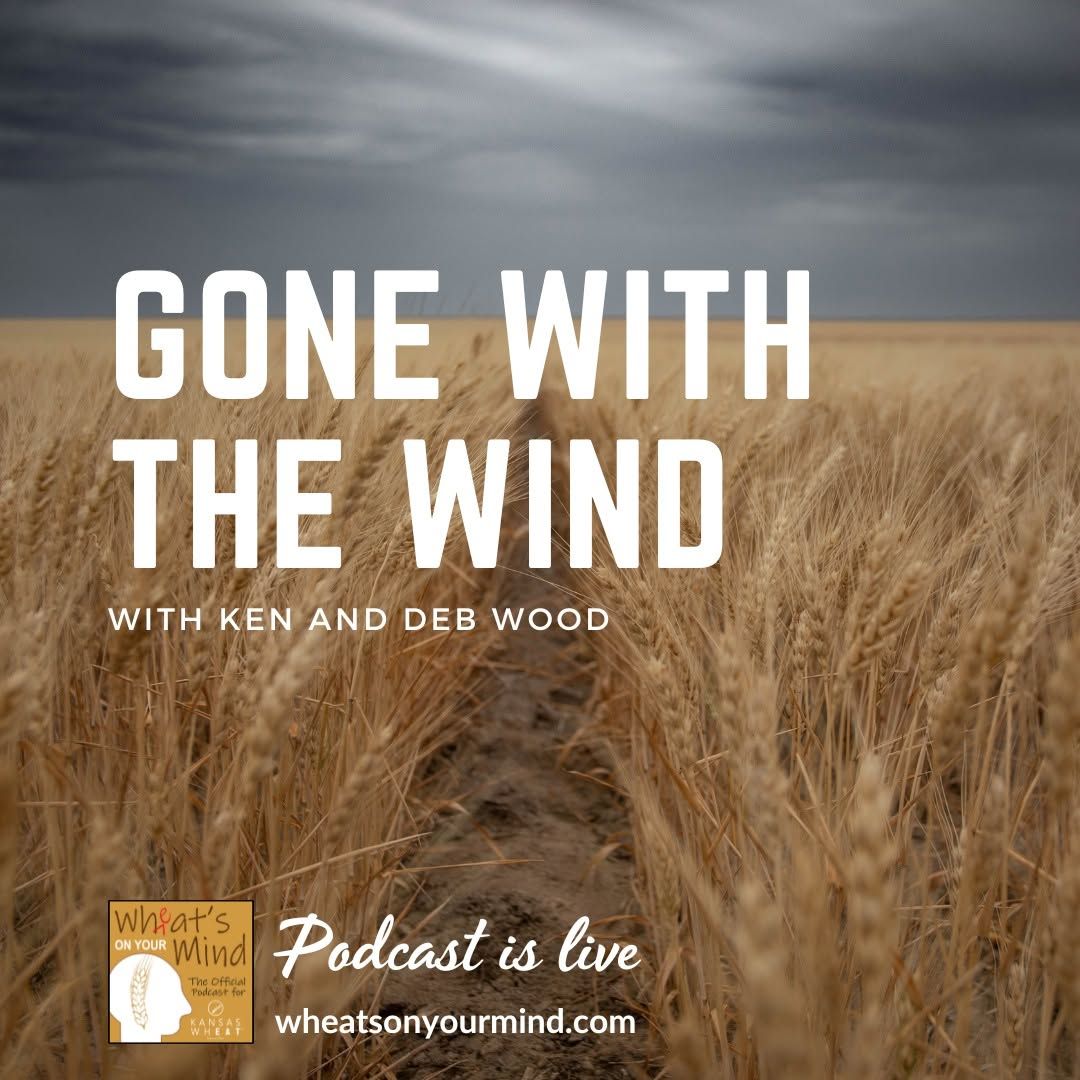
Your home, your farm buildings and farm equipment are all gone in mere minutes.<br>What would you do? <br>Where would you start?<br><br>Ken and Deb Wood from Chapman, Kansas lived this scenario after a tornado destroyed everything they owned in the middle of the <br>growing season.<br>Decisions had to be made. How would the farm go on? Ken and Deb share the experience and lessons they learned on this episode.
 EP 203
The Future of AI in Everyday Life
with Marsha Boswell
Kansas Wheat’s own Marsha Boswell is the guest on this episode of the podcast. <br><br>Marsha talks about eatwheat.org – a website that tells stories about Kansas wheat farmers, educates consumers, and inspires creativity with wheat food recipes. <br><br>Marsha also explains how Kansas Wheat communicates with its many different audiences.
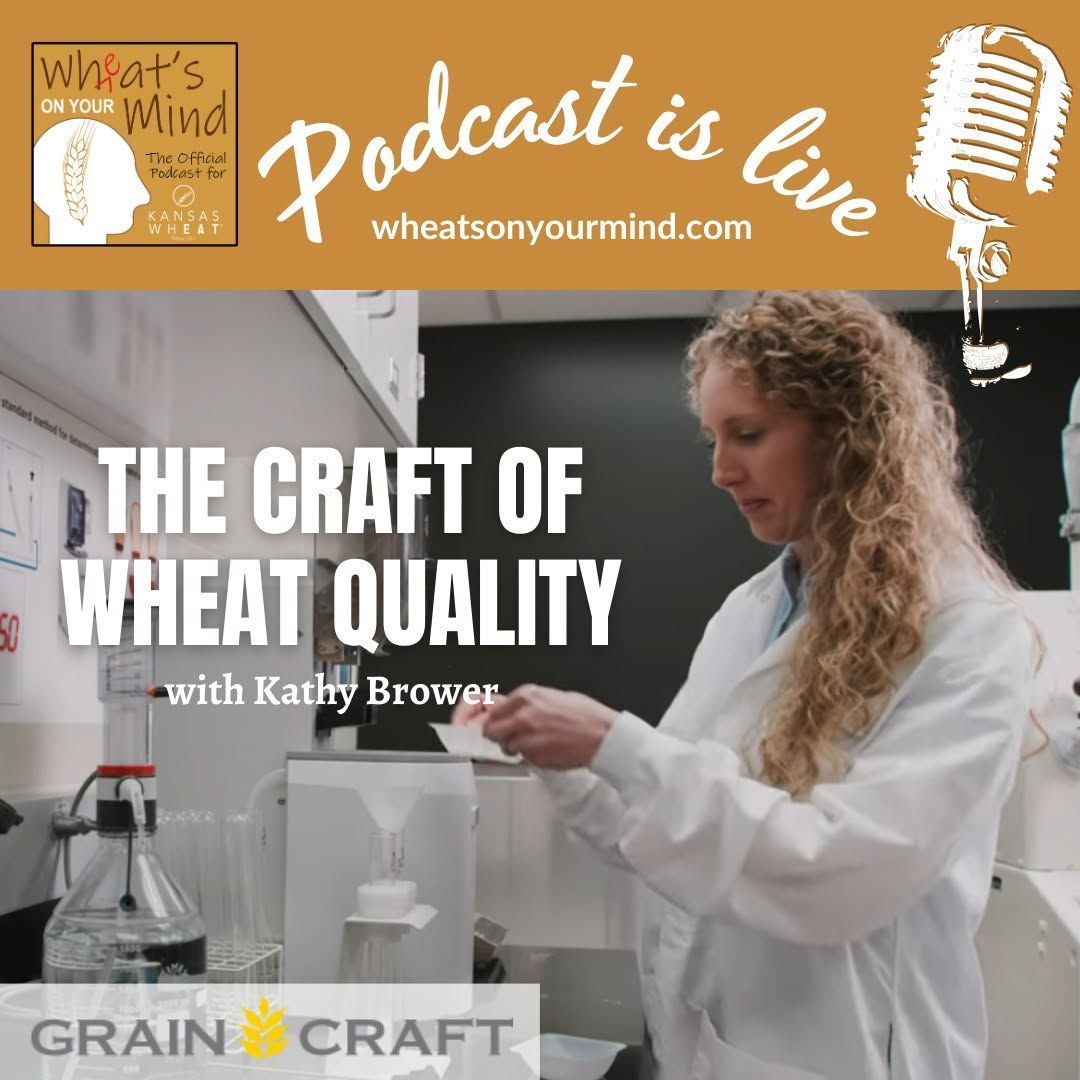 EP 202
THE CRAFT OF WHEAT QUALITY
with Kathy Brower
Wheat is a food ingredient and just like any other food ingredient, it requires quality control. <br>Kathy Brower is the lab manager for Grain Craft’s Innovation and Quality Lab at the Kansas Wheat Innovation Center in Manhattan. <br>On this episode, Kathy explains what makes wheat good or bad from a miller’s perspective.
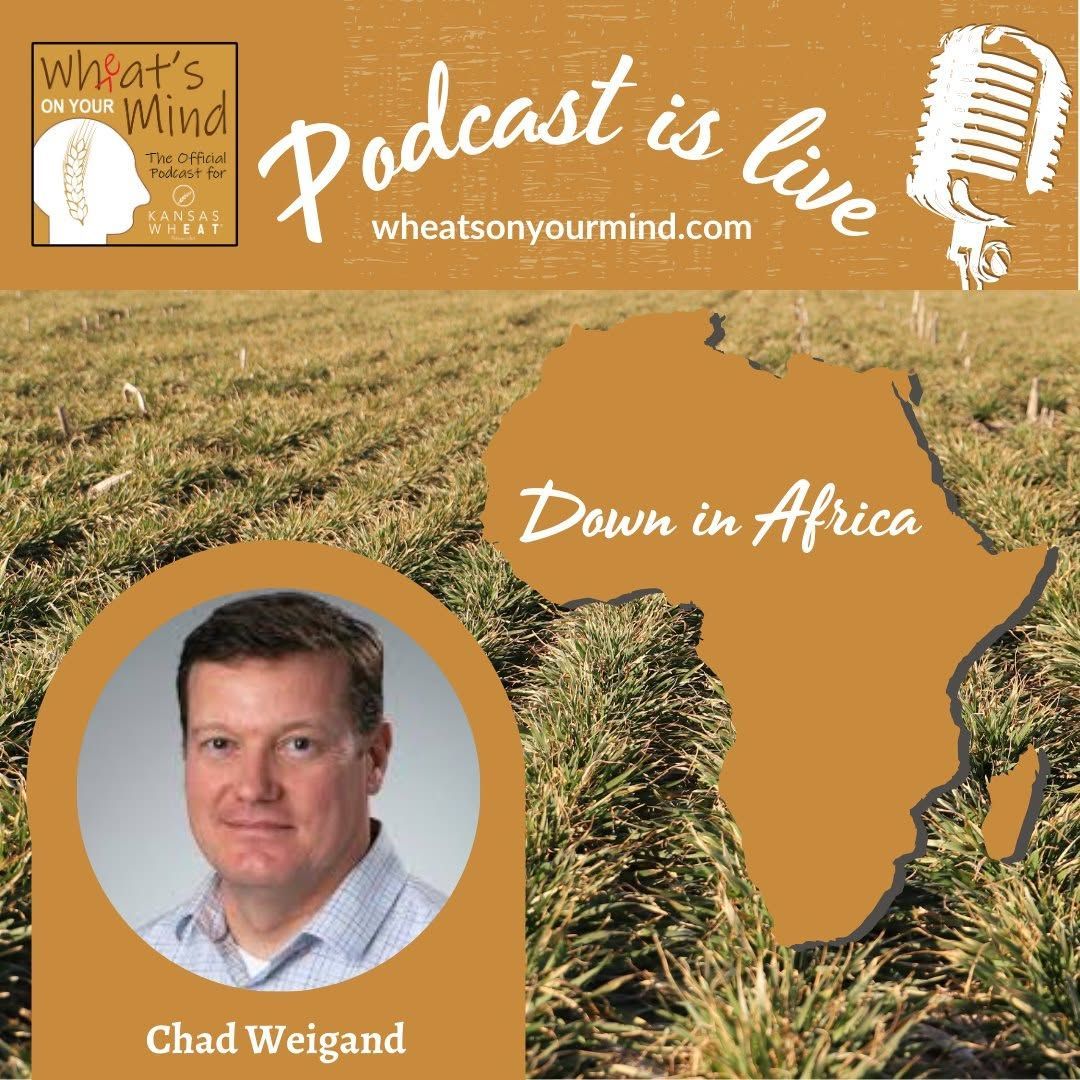 EP 201
DOWN IN AFRICA
with Chad Weigand
Chad Weigand, Regional Director of the Sub-Sahara African region for U.S. Wheat Associates joins Aaron on this episode to brief us on the markets for hard red winter wheat in different African countries. <br><br>From Nigeria to South Africa, Chad shares insights about those countries’ preferences in wheat.
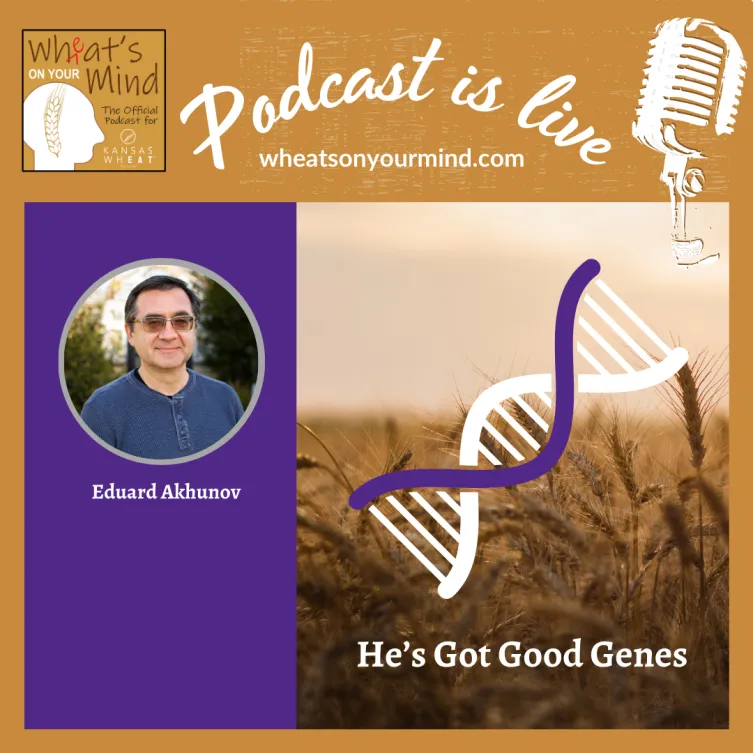 EP 127
HE’S GOT GOOD GENES, EDUARD AKHUNOV
with Eduard Akhunov, Ph.D.
Gene editing, genetic modification, transgenic; ever wonder what those terms mean? <br>Eduard Akhunov with Kansas State University does, and he’ll explain it all in this episode. <br><br>Learn how powerful new tools like gene editing can transform the world of wheat breeding and how science is leveraging ancient genetics to improve modern-day wheat.
 EP 126
HEARTLAND PLANT INNOVATIONS, DUSTI GALLAGHER
with Dusti Gallagher
Heartland Plant Innovations is a farmer-owned plant science services company at the Kansas Wheat Innovation Center in Manhattan.<br>Dusti Gallagher has been with HPI since its early days and joins Aaron on this episode to talk about the origins of HPI and how it continues to serve wheat farmers in Kansas and around the globe.
 EP 125
THE ROOTS OF RADIO, ERIC ATKINSON
with Eric Atkinson
The wireless telegraph, i.e., radio, has a rich history at Kansas State University. Some of the earliest agriculture radio programming originated in Manhattan, Kansas, over 100 years ago.<br>Retired K-State agriculture radio personality Eric Atkinson shares the details on this episode. Listen to hear about the evolution of agriculture radio and some other anecdotes from Eric’s storied career, including his encounter with legendary basketball coach Bobby Knight.
 EP 124
K-STATE 105: EXTENSION AND SO MUCH MORE, JESSICA GNAD
with Jessica Gnad
Jessica Gnad, Director of the K-State 105 Program, joins Aaron on the podcast to explain how the K-State 105 program works. K-State 105 is an economic growth and advancement initiative built out of the Economic Prosperity Plan directive by the Kansas Board of Regents.
 EP 123
UNDER THE WHEAT STATE DOME
with Ken Rahjes
Ken Rahjes, chair of the House Ag Committee in the Kansas House of Representatives, talks about rural economic issues and provides a preview of the 2024 Kansas legislative session.
 EP 122
THE BRIGHT FUTURE OF GRAIN SCIENCE EDUCATION
with Hulya Dogan Ph.D., Justin Gilpin
Aaron and Justin visit with Hulya Dogan, interim department head for Grain Science & Industry at Kansas State University. The department has many exciting things happening.<br>Job placement for current students is excellent, and future students can look forward to a brand-new home in the planned Global Center for Grain and Food Innovation.
 EP 121
THE ELEVATOR MAN
with Tom Tunnell
Tom Tunnell has seen it all in his 40-plus-year career in the grain handling industry and has stories to tell.<br>The retired former CEO of the Kansas Grain and Feed Association joins Aaron to cover some of the highlights including the passage of the Staggers Act, a visit from Boris Yeltsin, and much more.<br>Tom also shares the story of E J Smiley, the first grain and feed CEO who did time in jail in the first anti-trust case that went to the U.S. Supreme Court.
 EP 120
IT’S SPRING IN NORTH DAKOTA
with Jim Peterson
Jim Peterson with the North Dakota Wheat Commission is the guest on this episode. <br>He gives us a review of the 2023 spring wheat crop and explains some of the key differences between winter wheat and spring wheat country. <br>Jim and Aaron also discuss acre trends, research and railroad mergers and markets. <br>Everything you’ve ever wanted to know about spring wheat in this episode!
 EP 119
AS THE WHEAT WORLD TURNS (OCTOBER 2023 UPDATE)
with Justin Gilpin
In this timely episode of Wheat’s On Your Mind, recorded on October 16, 2023, Justin Gilpin, CEO of Kansas Wheat, provides his perspective on the 2023 Kansas crop, global trade issues, and tells us about recent visitors to the Kansas Wheat Innovation Center.
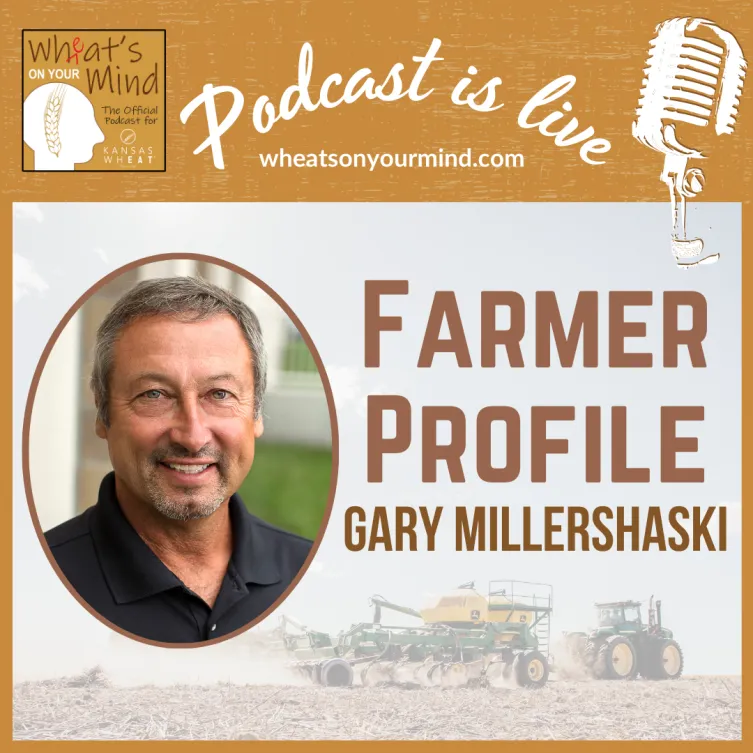 EP 118
FARMER PROFILE – GARY MILLERSHASKI
with Gary Millershaski
Aaron visits with Gary Millershaski from Lakin in West Central Kansas. He currently serves as the chair of the Kansas Wheat Commission board of directors.<br>The Millershaski Farm has had its share of challenges in the past couple of years.<br>Gary talks about those challenges his farming operation and explains his interest in wheat leadership at the state and national level.
 EP 117
WHEAT WAY DOWN SOUTH
with Miguel Galdos
Miguel Galdos, Regional Director of the South American region for U.S. Wheat Associates, joins Aaron on this episode to brief us on the markets for hard red winter wheat in different South American countries. From Brazil to Peru to Colombia, Miguel shares insights about those countries’ preferences in wheat and steps that his team takes to increase U.S. market share.
 EP 116
LEGENDARY LEADERS, THE KARL PROGRAM
with Jill Zimmerman
The Kansas Agriculture Rural Leadership program uses the tag ‘Be Legendary’. <br>Over 400 participants in the KARL program have followed the footsteps of legends since the program began in 1991. <br>On this episode, Jill Zimmerman, the president of the KARL program, talks about the history of the program and its evolution over the past few years. <br>If you’ve ever had an interest in participating in the KARL program, this episode is for you.
 EP 115
WHEAT WEATHER WITH ROSS
with Ross Janssen
As far as wheat years go, 2023 has been one to forget. Ross Janssen, chief meteorologist with KWCH TV in Wichita, Kansas joins Aaron to explain the ups and downs of the 2022-23 wheat season.<br>How did the extreme drought in Western Kansas get partially erased in just a couple of months? What does the current El Niño forecast mean for next year’s Kansas wheat production? <br>Ross addresses those questions and much more.
 EP 114
THE SPIRITS OF BOOT HILL
with Hayes Kelman
Wheat is used as an ingredient in so many foods AND beverages. Wheat whiskey anyone?<br>Hayes Kelman, Founder and CEO of Boot Hill Distillery in Dodge City joins Aaron to tell the story of how a Southwest Kansas farm kid ended up in the distilling business.<br>Learn more about the distilling process and why wheat is one of his favorite ingredients.
 EP 113
GLUTTONS FOR GLUTEN
with Evan Backhus
Evan Backhus with PureField Ingredients in Russell Kansas explains the reasons behind the exploding wheat gluten demand. <br>He talks about the process of extracting gluten from wheat and what food products it’s used in. <br>And, he has some guidelines for farmers who want to raise wheat for PureField.
EP 112
AS THE WHEAT WORLD TURNS
with Justin Gipin
In this timely episode of Wheat’s On Your Mind, Justin Gilpin, CEO of Kansas Wheat, provides his perspective on the 2023 Kansas wheat harvest, the Russian/Ukraine war, and some global trade issues that have never been experienced before.
EP 111
THRESHER NATION - HOW MENNONITES AND WHEAT DEVELOPED KANSAS
with Glenn Ediger
Glenn Ediger, author of “Leave No Threshing Stone Unturned” shares the history of and the hunt for threshing stones used by Mennonites who settled in and around central Kansas. This episode gives a glimpse at how the unique bond between Kansas and Ukraine developed.
EP 110
THE ABC’S OF RESEARCH FUNDING WITH DR. MARTY DRAPER
with Marty Draper, Ph. D.
As a land grant institution, K-State is responsible for applicable research for agriculture and natural resources.<br><br>There are many ways these kinds of projects receive funding. Dr. Marty Draper sits down and explains where funds come from and how they help keep new agriculture advancing.
EP 109
MORE THAN JUST AN ESTIMATE WITH DAVE GREEN, WHEAT QUALITY COUNCIL
with Dave Green
Dave Green, Executive Vice President of the Wheat Quality Council, calls in to shed light on the history of US Wheat and why quality has only been cast in the spotlight more and more. <br>Green also explains the goals and importance of the annual winter and spring wheat tours.
EP 108
HOW ‘BOUT THIS WEATHER? WITH CHRISTOPHER REDMAN
with Christopher Redman
In ag, weather talk is the furthest thing from small talk. <br>With the past few dry years, it led many more people to wonder why. Aaron sits down with Kansas Mesonet network manager, Christopher Redman.
EP 107
THIS LITTLE GRAIN WENT TO THE MARKET: WHEAT TRADE WITH DALTON HENRY
with Dalton Henry
Dalton Henry, U.S. Wheat Associates Vice President, discusses trade policy.
EP 106
AUSSIE WHEAT? HE’S YOUR GUY - GUY ALLEN
with Guy Allen
Guy Allen, Senior Economist for the IGP Institute at Kansas State University, sits down with host Aaron Harries to discuss the production, marketing, and trading of Australian wheat. <br>Together, they compare production between U.S. and Australia and discuss agricultural issues of the land down under.
EP 105
ERNIE MINTON: THE LAND GRANT REVAMP
with Ernie Minton, Ph.D.
Kansas State University Dean of the College of Agriculture, Dr. Ernie Minton, gives listeners the rundown on what the plan for the future of K-State College of Agriculture looks like.<br><br>With all the new, updated buildings in the works, we are entering an exciting time for the university.
EP 104
YIELD VS. PROTEIN: BREEDING FOR BOTH
with Mary Guttieri, Ph. D., Allan Fritz, Ph. D.
Mary Guttieri, Research Geneticist, USDA ARS, Dr. Allan Fritz, PhD Wheat Breeding Kansas State University.<br>Wheat geneticist duo, Dr. Mary Gutteri and Dr. Alan Fritz, team up to explain how yield and protein duke it out and what wheat breeders are doing today to create a variety that’ll reverse that. They also walk us through what wheat breeding looks like!
EP 103
CREATING A POWERHOUSE: JAGGER WHEAT WITH DR. ROLLIN SEARS
with Rollin Sears, Ph. D.
Creating a Powerhouse: Jagger Wheat with Dr. Rollin Sears For over a quarter century, Jagger Hard Red Winter wheat has been a workhorse variety. <br>WYOM chats with the wheat breeder responsible for this infamous variety, Dr. Rollin Sears.
EP 102
ONE IN A BRAZILLION: DR ROMULO LOLLATO (PART 2)
with Romulo Lollato, Ph.D.
If you’ve been to a wheat-related meeting, you’ll definitely recognize this voice! Dr. Romulo Lollato, associate professor of wheat and forage production at Kansas State University, sits down with host, Aaron Harries, to chat about growing up in Brazil, where his passion for extension work really took hold, how he ended up at Oklahoma State then eventually here at K-State.
EP 101
ONE IN A BRAZILLION: DR ROMULO LOLLATO (PART 1)
with Romulo Lollato, Ph. D.
If you’ve been to a wheat-related meeting, you’ll definitely recognize this voice! Dr. Romulo Lollato, associate professor of wheat and forage production at Kansas State University, sits down with host, Aaron Harries, to chat about growing up in Brazil, where his passion for extension work really took hold, how he ended up at Oklahoma State then eventually here at K-State.